The “Almost Fits” Trap: Why Keeping Someday Clothes Keeps You Stuck
The Closet Moment Most Women Know Too Well
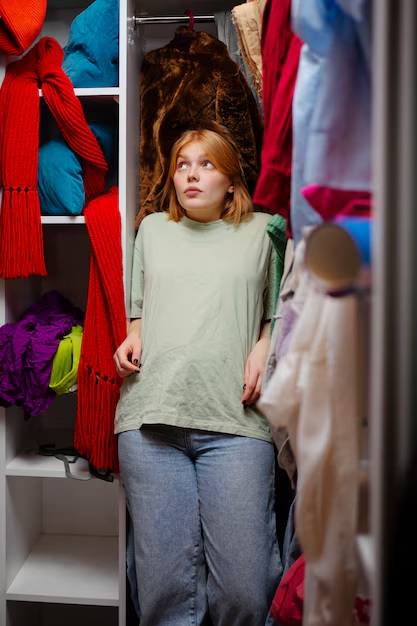
You stand in front of your closet, scanning the rows of clothes.
The hangers are full.
The drawers are packed.
There are more options than you could wear in a month.
And yet, when it’s time to get dressed, nothing feels right.
You try on a pair of jeans. They almost fit.
You pull on a blouse. The neckline feels slightly off.
You swap shoes, then change the entire outfit again.
By the time you finally settle on something to wear, you already feel a little defeated.
If this routine sounds familiar, you are not alone. Many women experience this daily frustration of having a closet full of clothes but nothing to wear.
The problem is rarely a lack of clothing.
More often, the issue is something I call the Almost Fits Trap.
Closets slowly fill with pieces that technically work but rarely feel great to wear. Over time, those pieces create noise, hesitation, and decision fatigue.
What the “Almost Fits” Trap Really Looks Like
Closets that feel overwhelming are rarely filled with clothes that are completely wrong.
Instead, they are filled with clothes that almost fit, pieces that almost work, and items that no longer reflect the life you live today.
That gray area makes these items difficult to release. They are not obvious mistakes, yet they quietly prevent your wardrobe from working well.
“Almost fits” clothing usually falls into a few familiar categories.
Clothes waiting for body changes
Many women keep pieces for the day things return to normal.
These may include:
Jeans that might fit again after losing a few pounds
A dress that looked amazing ten years ago
A blazer that technically closes but feels uncomfortable
When clothing becomes tied to future expectations, the closet quietly turns into a scoreboard instead of a support system.
Clothes from a previous lifestyle
Sometimes clothing remains because it belonged to a different chapter of life.
You may still own:
Corporate outfits from a career you left
Event dresses from a social calendar that changed
Shoes designed for a routine you no longer live
When your lifestyle evolves but your wardrobe does not, getting dressed begins to feel strangely disconnected.
Clothes kept for sentimental reasons
Some pieces stay because they carry emotional weight.
These might include:
An expensive coat you rarely wear
A dress from a milestone event
A handbag purchased during a special moment in life
The memory is meaningful, but the clothing itself may no longer support your daily routine.
Clothes tied to a former identity
Certain items represent a version of you that has already changed.
They may remind you of:
A younger stage of life
A demanding career chapter
A lifestyle that has evolved
As I explained in my article on reinventing yourself at 60, midlife is often less about starting over and more about realignment.
Realignment, however, requires editing what no longer fits the present version of you.
Why Clothes That Almost Fit Make Getting Dressed So Hard
Every time you try something on that almost works but does not quite feel right, your brain registers a small moment of friction.
Individually, these moments seem minor.
Together, they become exhausting.
You try the jeans and they feel tight.
You change.
You try the blouse and it feels dated.
You change again.
By the time you finally settle on an outfit, you have already spent far too much mental energy.
This is what psychologists call decision fatigue.
Closets filled with “almost” pieces create constant micro-decisions. Over time, your brain begins to avoid the process altogether.
That is when many women start to say:
I have plenty of clothes, but nothing to wear.
Why We Hold Onto “Someday” Clothes
Letting go of clothing is rarely just a practical decision.
More often, it is emotional.
Many women hold onto pieces because of:
Guilt, especially if the item was expensive or rarely worn
Hope, believing they might wear it again someday
Pressure, feeling they should fit into it again
Nostalgia, remembering how great it once looked
None of these reasons are about whether the clothing supports your life today.
They are about the stories attached to the item.
Storage Is Not a Waiting Room
Closets are designed to support your daily life.
However, when “almost fits” clothing accumulates, the closet slowly becomes a waiting room for pieces that may never return to regular rotation.
Clothing waits for:
A body change
A lifestyle shift
A moment that may never come
Meanwhile, the pieces that actually work become harder to see.
When your closet contains too many emotional decisions, clarity disappears. Without clarity, getting dressed becomes frustrating instead of empowering.
The Closet Reality Check
If you are unsure whether something belongs in your wardrobe, try asking yourself three simple questions.
Does this piece fit comfortably today?
Would I buy this again if I saw it in a store today?
Does this support the life I actually live now?
If the answer is no to two of those questions, the item may belong in your past—not your closet.
What a Healthy Closet Actually Looks Like
A functional wardrobe is not defined by how much clothing you own.
It is defined by how well your clothing aligns with your life.
A healthy closet typically contains:
Clothes that fit comfortably today
Pieces that reflect your current lifestyle
Items that combine easily into outfits
Clothing that makes you feel confident when you put it on
The goal is not perfection.
The goal is ease.
When your closet reflects the woman you are today, getting dressed becomes simple again.
Letting Go Creates Space for Alignment
When the “almost” clothes leave your closet, something surprising happens.
The pieces that truly work become easier to see.
Outfits become easier to build.
Decisions become faster.
Confidence begins to return.
Midlife is not about starting over.
It is about realigning your environment with the person you have become.
Your closet simply happens to be one of the most powerful places to begin.
Start with Structure
Most women believe they need more clothes. What they actually need is clarity.
When your wardrobe contains pieces that fit, reflect your life, and combine easily into outfits, getting dressed becomes effortless again.
If you want to begin that process, start with Organize Like a Pro ($9).
Inside, you will learn how to:
Edit your wardrobe without overwhelm
Create breathing room in your closet
Organize clothing so you can clearly see what works
If you also struggle with turning your clothes into outfits, pair it with Style Like a Pro ($9).
Or grab both for $15 and solve the problem from both sides.
Because the real goal is not owning less.
The goal is getting dressed with confidence again.