How to Build Outfits from What You Already Own
After a closet reset, there is often a brief sense of relief.
The space looks better. It feels lighter. You can see what you have more clearly. For many women, this alone feels like progress—and it is. But shortly after, another realization tends to follow.
Getting dressed is still not as easy as expected.
This is where many people pause. They have done the work of editing and organizing, yet something still feels incomplete. It can be frustrating, especially when it seems like everything should be working by now.
The reason for this is simple, but often overlooked.
Organizing your closet and building outfits are two different skills.
When you organize your closet, you create visibility. You make it easier to access what you own. But that does not automatically translate into knowing how to combine those pieces in a way that feels cohesive and natural.
If you’ve worked through How to Reset Your Closet for Clarity and Confidence, you’ve already built a strong foundation. Now the focus shifts from what you have to how you use it.
Outfit building requires a different kind of awareness. It involves noticing which pieces naturally work together, which combinations feel comfortable, and which outfits you return to without hesitation.
Most women already have this information—they just haven’t taken the time to recognize it.
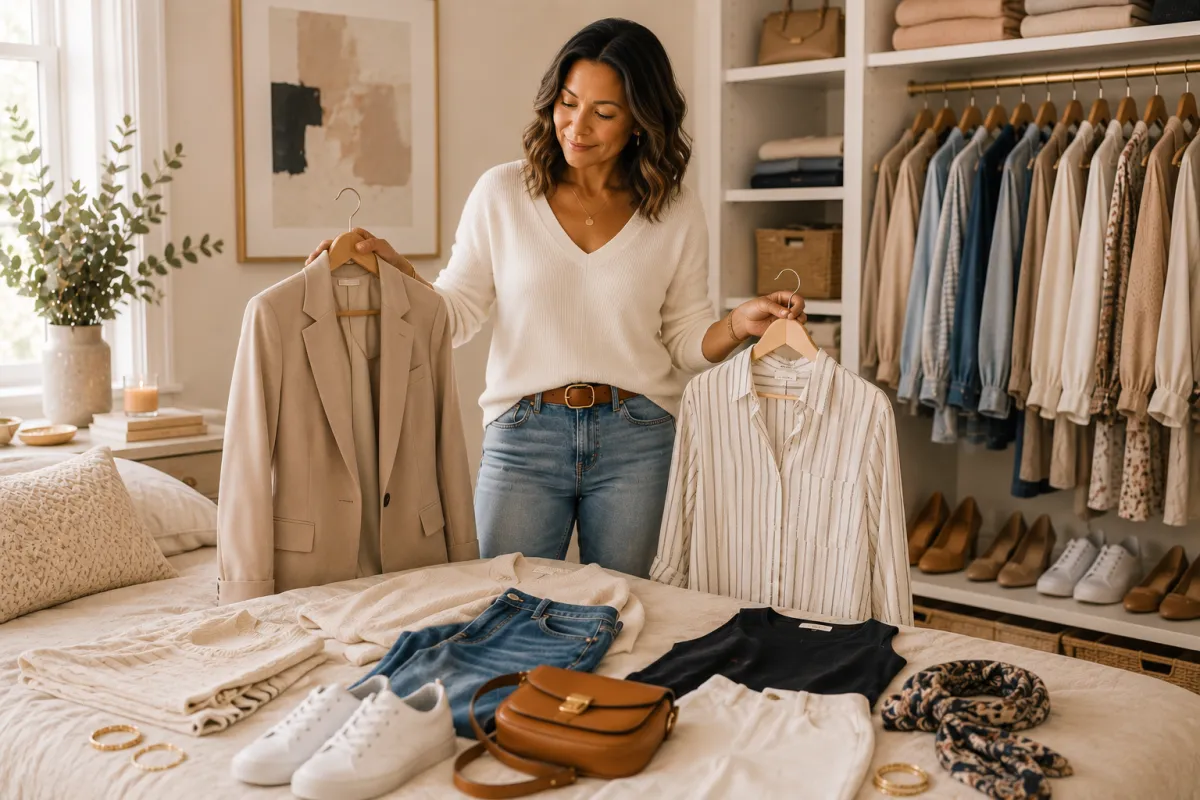
Start by paying attention to what you wear most often. Notice the pieces that feel easy to reach for and the combinations that come together without effort. These are not random. They are patterns, and they offer valuable insight into what works for you.
As you begin to build from those patterns, your closet starts to feel more usable. You are no longer standing in front of it trying to figure things out. Instead, you are choosing from combinations that already make sense.
This is where confidence begins to build.
Not because you’ve added more, but because you’ve learned how to use what you already have.
👉 Explore the Style Alignment Guide™
Put It Into Practice
Notice your easy outfits. Look at what you reached for most often over the past week and write down the pieces and combinations that felt comfortable and natural.
Name the pattern. Look for what those easy outfits have in common — the colors, shapes, or pieces that repeat — and let that pattern guide your next combinations.
Build one new combination. Take a favorite piece you already wear often and pair it with something you usually pass over, then try the outfit on at home before you need it.
Notice how it feels. Pay attention to comfort, ease, and how you carry yourself in the new combination, and keep the pairings that feel natural for you.
Your Next Step Starts Here
You've explored the ideas. Now it's time to put them to work. Whether you want to keep learning, take action on your own, or connect with someone who can help, the YHA! Ecosystem offers a place to begin.
Keep Learning: Discover more practical advice and fresh inspiration in our Personal Style Development articles.
Take Action: Build on what you've learned with our free The Everyday Styling Guide. Not sure where to begin? Take the Closet Confidence Quiz™ to discover your starting point in just a few minutes.
Find an Expert: Looking for personalized guidance or hands-on help? Explore the YHA! Professional Community to discover local professionals and specialty businesses that can support your next step.